
Send three web designers the message "I need a website for my company" and you will get three quotes that cannot be compared: one prices five template pages, another a custom design with copywriting, the third a store. A short website brief fixes that. This website brief template lists the ten sections worth answering, the questions behind each one, and how to use the finished brief to compare proposals fairly.
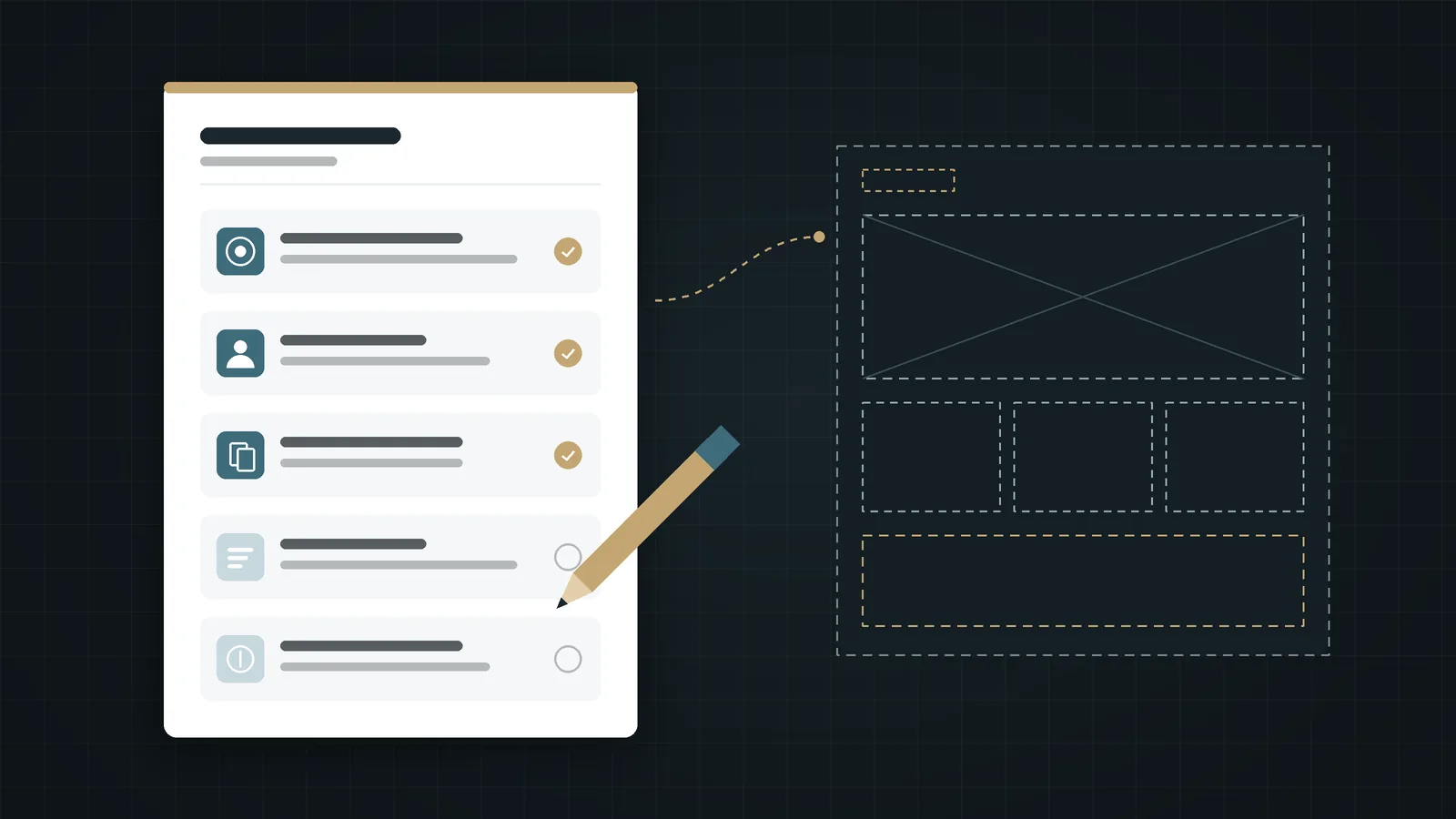
In short:
- A website brief is one to three pages that describe your business, the site's goal, its pages and features, and your budget and timeline.
- It is not a technical specification; plain answers are better than jargon.
- Send the same brief to every company you ask for a quote, so the proposals cover the same scope.
- The most useful lines are often the simplest: what the visitor should do, and who will update the site.
In this guide
What a website brief is, and what it isn't
A website brief is a short document that explains what you need and why; a website brief template simply gives that document a structure. It gives a designer enough to suggest an approach and an honest price, and it gives you a reference point when you review proposals, designs and the finished site.
It is not a technical specification. You don't need to choose a programming language or describe a database. If you know the answer to a question, write it down; if you don't, say so. "Not sure, please advise" is a perfectly useful answer.
The website brief template: ten sections
Copy the headings below into a document and answer the questions under each one. Short bullet points are fine.
1. About your business
Give the context a stranger would need.
- What do you sell or provide, and to whom?
- Where do you operate: one city, all of Saudi Arabia, the wider region?
- What makes you different from competitors?
2. The goal of the website
This is the most important section.
- What is the one action you want visitors to take: call, WhatsApp, submit a form, book, buy?
- How will you know the website is working six months after launch? (Free tools such as Google Search Console show how people find you.)
- If you have a current website, what is wrong with it?
3. Your audience
Describe the people the site is for.
- Are your customers individuals or companies?
- What do they usually ask before buying?
- Which language do they prefer: Arabic, English or both?
4. Pages
A first list is enough; the designer will help refine it.
- Which pages do you expect: home, about, services, projects, contact, policies?
- How many services need their own page?
- Do you need a blog or news section?
5. Features
List what the site has to do, not how.
- Contact form, WhatsApp button, map, appointment booking, online payment, client login?
- Any connection to other systems, such as a CRM or booking software?
6. Content and photos
Content is the most common cause of delays, so be honest here.
- Who will write the text: you, your team or the designer?
- Do you have real photos of your team, premises and work, or do you need photography?
- Is your logo available in a high-quality format?
7. Languages
Language affects layout, cost and timeline.
- Arabic only, English only, or both?
- Will both versions have the same pages?
8. Look and feel
Examples are worth more than adjectives.
- Share two or three websites you like, and say exactly what you like about each.
- Share any you dislike, and why.
- Do you have brand colours and fonts to follow?
9. Technical and ownership
These answers prevent problems at launch.
- Do you already own a domain? In whose name is it registered?
- Do you have hosting and business email set up?
- Who will update the website after launch, and how often?
10. Budget, timeline and decisions
Ranges are fine; they help designers propose the right scope.
- What budget range have you set?
- Is there a date the site must be live, and why?
- Who approves designs and content, and how quickly can they respond?
A short filled-in example
Here is how the first sections of the website brief template might look for a fictional Riyadh accounting firm. Notice how short the answers can be:
- Business: Bookkeeping, VAT returns and payroll for small companies in Riyadh. We respond within one working day and work in Arabic and English.
- Goal: More consultation requests through WhatsApp and the contact form. Success means a steady flow of qualified enquiries each month.
- Audience: Owners of small and medium companies, many of them non-Arabic speakers. They ask about price, deadlines and confidentiality.
- Pages: Home, About, one page per service (three services), Contact, Privacy policy.
- Features: Contact form, WhatsApp button, office location on a map. No online payment.
- Content: We will write the first draft; we need help editing. We have team photos but no office photos yet.
- Languages: Arabic and English, same pages in both.
That is less than half a page, and it already tells a designer the scope, the goal, the languages and where help is needed.
Mistakes that weaken a brief
No clear goal
"A modern, professional website" describes almost every website. Say what the site should make people do.
Copying a competitor
Pointing to a competitor's site is useful as a reference, but the brief should explain what your business needs, not ask for a copy.
Hiding the budget
Without a range, one company proposes the minimum and another the maximum. You end up comparing two different projects.
Ignoring content
If no one is responsible for text and photos, the schedule will slip, however good the designer is.
Forgetting life after launch
Who updates the site, who renews the domain, who fixes problems? Decide before the site goes live.
How to use the brief to compare quotes
- Send exactly the same brief to every company.
- Ask for an itemised proposal: pages, features, languages, rounds of revisions, content, hosting, domain and support after launch.
- Check what is excluded as carefully as what is included.
- Compare the proposals line by line against your brief, not only by the total price.
- Ask how each company would measure whether the site meets the goal in section 2.
For the wider picture, from portfolios to contract terms that protect your ownership, read how to choose the right web design company. If your project is a rebuild, pair this brief with our website redesign checklist.
Send your brief to Webnaa
To start a project with Webnaa, the essentials are the same as in sections 1 to 6 above: your logo, business details, contact channels, the text and images you already have, and examples or ideas you like. Websites start from SAR 39 a month with no setup fee, paid every 6 months or yearly at 10% off, and we write the content for you on every website; a WordPress site of 5 pages in Arabic and English with a dashboard is SAR 324 a month, and our price calculator shows the price for your own pages and languages, so you know the cost before sending anything.
Choose what you need, see your exact price
The price updates with every choice. No surprises, no hidden fees.
The calculator is off. Press the power button to start
From Zoho, a global provider with data centres in Riyadh and Jeddah. More than 10 addresses are quoted separately.
Have your brief ready?
Work out your price in the calculator, from SAR 39 a month, then send us your brief and we'll reply with next steps.
FAQ
How long should a website brief be?
One to three pages is plenty for most business websites. A longer brief is only useful if the project is genuinely complex.
Do I need to know which platform I want?
No. Describe who will update the site and how often, and let the designer recommend a platform. If you are curious about the options, see WordPress or custom code?
Should I include my budget?
Yes, as a range. It helps designers propose a scope that fits, instead of guessing. You can still negotiate details once you see the proposals.
Is a brief the same as a request for proposal (RFP)?
An RFP is a more formal version used by larger organisations, often with evaluation criteria and deadlines. For most small and medium businesses, a clear brief does the same job with less effort.
What if I don't have any content yet?
Say so in section 6. Many designers can help with copywriting or structure the pages first so you know exactly what to write.
Summary
A good website brief saves time for everyone and makes quotes comparable. Use this website brief template to describe your business, the site's goal, your audience, pages, features, content, languages, style, ownership and budget. Keep it short and honest, send the same version to every company, and compare the proposals against it line by line. The clearer the brief, the closer the finished website will be to what your business actually needs.