
Knowing how to choose a web design company matters, because this is not a one-off purchase. You are picking a partner whose work will shape how customers see your business, and how many of them get in touch, for years. This guide shows you what to ask, how to compare proposals fairly, and which contract terms protect you before you sign.

In short, the right web design company:
- Shows real, live websites similar to yours in industry or scale.
- Explains its process, phases and responsibilities in writing.
- Puts the website, the domain and every connected account in your name.
- Builds for speed, mobile and search visibility from day one, not after launch.
- Defines post-launch support clearly: what it covers, for how long, and how to reach them.
In this guide
Before you search: know what you need
Many website projects go wrong before the first design is drawn. The agency may not be weak at all; the business simply walked into the first meeting without a clear picture. Without one, you end up comparing proposals on price and looks alone, which are the two least useful ways to compare them.
Start with the business goal, not the look
Ask yourself what should happen after someone visits your website. Should they call you, request a quote, book an appointment or buy online? Each goal changes the page structure, where the buttons go and what content you need. A contractor’s website has to showcase completed projects and credentials, while a clinic’s website lives or dies by easy booking and trust in its team.
Three questions to answer before the first meeting
- Who exactly is your audience, and what do they look for before contacting you?
- Which pages do you need now, and what can wait for a second phase?
- Who will prepare the content, the text and the photos: you, the agency, or both?
Even a one-page brief with these answers makes proposals comparable, and it quickly shows you which agencies ask the right questions and which ones just send a template.
How to choose a web design company: seven criteria
No agency is perfect for every project, but a few consistent criteria separate a professional partner from a rushed vendor. Apply them to every company on your shortlist and keep your notes in one table, so the comparison stays fair.
1. A portfolio that looks like your project
Don’t settle for polished images in a slide deck. Ask for links to real websites that are live today, ideally in an industry close to yours or at a similar scale. A live site reveals what screenshots hide: how fast it loads, how easy it is to use on a phone, and how clear the path to the contact button is.
How to review a portfolio like a decision-maker
- Open each site on your phone first; most of your visitors will arrive that way.
- Try the contact or booking form yourself and notice what happens after you submit it.
- Check whether every site shares the same template, or whether each client has a personality that fits its business.
- If you can, speak to a past client about deadlines and how the agency behaved after handover.
You can practice right away: explore our design samples and ask them the very same questions. The standard we recommend to you is the one we hold our own work to.
2. A written process with clear phases
A professional agency knows the route before it starts: when requirements are gathered, when you see the structure, when design begins, and when development and testing follow. Ask for these phases in writing, with an estimated duration for each and what the agency needs from you along the way. Without a written process, the deadline tends to move with every new comment.
Pay attention to the number of revision rounds included in each phase, too. Unlimited revisions sound generous at first, but they stretch the project and exhaust both sides. A clear, fixed number used with focus works far better.
One question that is often skipped: who owns the content? The words that explain your services and the photos that show your work are what actually convince customers. Agree early on who writes and who reviews, and make sure every image on your site is licensed for commercial use, so a copyright claim never surprises you after launch.
3. Technical quality you won’t see in the design
Design is what you see; technical quality is what your customers feel without noticing it: a page that opens quickly on mobile data, buttons that are easy to tap, and a contact form that reaches you every single time. These details directly affect how many enquiries your website brings in.

What to ask for specifically
- Load speed: ask them to measure performance with recognised tools and to track Core Web Vitals, the metrics Google uses to assess real user experience.
- Responsive layout: the design should start with mobile, not squeeze the desktop layout down.
- Security: HTTPS enabled, regular updates, and backups that have actually been restored at least once.
- Easy management: a dashboard that lets your team edit text and images without calling a developer each time.
- Arabic and English: correct right-to-left layout, readable Arabic typography, and properly linked language versions if your site is bilingual.
- Accessibility: sufficient colour contrast and descriptive alternative text, so every visitor can use the site.
4. You own the website and every account
This criterion alone deserves your full attention. Some projects look like a success until the owner wants to switch providers and discovers that the domain, the hosting and every account are registered to the agency, and that getting them back means a long negotiation.
What must be registered in your name
The domain name
Your domain is your permanent address online. Register it to you or your company, keep the login to the registrar account yourself, and know when it renews.
If the domain is registered to the agency
Don’t ignore it just because the site works today. Request the transfer in writing before the next renewal date, and keep a copy of the correspondence and invoices.
Hosting and connected accounts
The same applies to the hosting account, Google Search Console, Google Analytics and any email or analytics tool connected to the site. A trustworthy agency adds you as the owner of these accounts rather than giving you view-only access.
5. Search visibility built in from the start
You cannot bolt search visibility on as a final layer once the site is finished. Page structure, titles, links and speed are all decisions made during the build. Ask how the agency handles the title and description of each page, the XML sitemap, and redirects from your old URLs if you already have a website, so you don’t lose what you have built.
Ask, too, whether your service pages will be built around the phrases your customers actually type. A buyer might search for “construction company website design” or “web design company in Riyadh”, and a good agency works those phrases into titles and copy naturally, without stuffing that weakens the text.
Be wary of any promise of the number one spot on Google within a set time. Google itself states in its guide to hiring an SEO that no one can guarantee a number one ranking.
6. Communication and responsiveness
How an agency treats you before the contract is the most honest preview of how it will treat you after. Did they answer your questions clearly? Did they name a person responsible for your project? Did the proposal arrive when promised? Agree in advance on the official communication channel, the meeting or reporting rhythm, and the expected response time.
To test this in practice, ask specific questions in the first meeting: who will manage my project day to day? How will you report progress, and how often? What happens if I need an urgent fix after launch? Clear, prompt answers matter more than any polished presentation.
7. Support after launch
Launch is the beginning of a website’s real life, not the end. You will need security updates, small edits and probably new pages as your business grows. Ask plainly: what does post-launch support include, and for how long? How is extra work handled once it ends? Will you receive a short guide to managing the site yourself?
Ask about ongoing maintenance as well: who keeps the platform and plugins updated, who checks that backups really work, and who notices a sudden drop in speed or search visibility. A website nobody looks after declines quietly, without anyone noticing.
A good website is not judged by how it looks on launch day, but by what it does for your business six months later.
How do you compare two different proposals?
Two proposals can look alike on the surface and differ a great deal underneath. The practical way to compare them is to put them side by side and read them line by line, rather than comparing the final figure alone:
- Scope: do both list the same pages and features, or does one leave important details “to be discussed”?
- Recurring costs: domain and hosting renewals, licences for paid plugins or themes, and who pays for them after year one.
- Content: does the proposal include copywriting or photo preparation, or does it assume you will supply everything?
- Ownership: does it state explicitly that the website and its accounts will be in your name?
- Support: how long post-launch support lasts and what it covers, because this line alone can change the value of the whole offer.
The more expensive proposal can turn out cheaper if it includes what the other one will charge you for later. The reverse is also true; what matters is knowing exactly what you are paying for.
The project journey after you sign
When you know the phases in advance, you can follow progress with confidence and know when a decision is needed from you. Here is the typical journey of a professional business website, and what you receive at the end of each step:
- Discovery and requirements A meeting to understand your business, audience and goals, ending with a requirements document you review and approve before any design.
- Structure and content A sitemap and a proposed order of sections, with the text and images each side needs to provide.
- Design Key pages designed for mobile and desktop, followed by a fixed number of revision rounds until approval.
- Development and testing The site is built and forms are connected, then tested across devices and browsers and measured for speed.
- Launch and handover The site goes live on your domain, you receive the accounts and credentials, plus a short training on managing content.
In practice, projects rarely stall in design or development; most delays happen while waiting for content or approvals. So agree from the start on when content will be delivered and how quickly each phase will be reviewed, just as you agree on the agency’s own deadlines.
The web design contract: terms not to sign without
A contract is not a formality; it is the only reference when expectations differ. It does not need to be long or complicated, but it must answer these points without ambiguity:
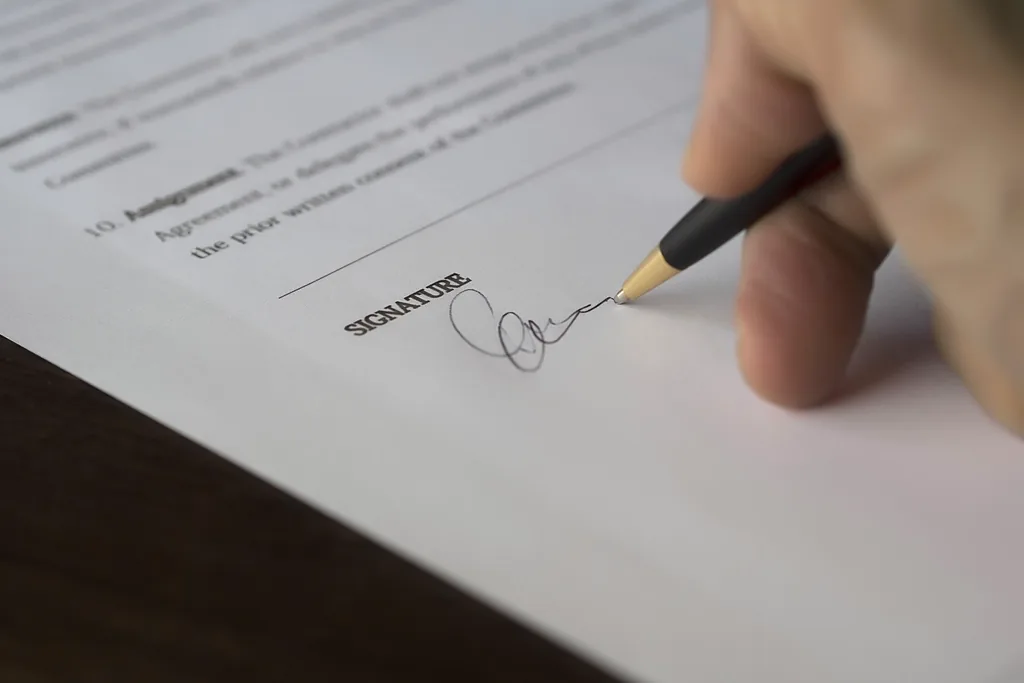
- Scope of work: the agreed pages and features in detail, and what the project does not include.
- Timeline: delivery dates for each phase, and what happens if either side is late.
- Intellectual property: ownership of the design, code and content transfers to you once payment is complete.
- Accounts and access: the domain, hosting and connected accounts registered in your name.
- Revisions: the number of revision rounds per phase, and how the agency handles extra requests.
- Support and warranty: the length of post-launch support and the fixes and updates it covers.
- Privacy and data protection: both sides’ commitment to protecting your customers’ data under the applicable regulations.
If an agency refuses to put any of these terms in writing, treat that as a clear answer to the question of trust.
Red flags worth pausing for
Some warning signs appear early in the first conversations, and spotting them can save you months of frustration:
- A ready-made proposal arrives before anyone asks about your business or goals.
- Guaranteed search rankings or a promised number of new customers.
- A portfolio without live links, or links to websites that no longer work.
- Vague answers about who owns the domain and hosting after handover.
- Pressure to decide quickly because an offer “ends today”.
- No mention of testing, speed or mobile before launch.
One red flag does not automatically rule an agency out, but it is reason enough to ask for a written clarification before you go further.
Your pre-signing checklist
Tap each item you have confirmed with the agency you are considering, and you will see how ready you are to decide.
- I have seen live websites from their portfolio and tried them on my phone.
- I have the project phases in writing, with a duration for each.
- I know how many revision rounds each phase includes.
- I have confirmed that the domain, hosting and accounts will be in my name.
- I have asked about speed, mobile and search basics.
- I know what post-launch support covers and for how long.
- I have read the intellectual property clause in the contract.
- I have a named contact person and a clear communication channel.
Your readiness: 0 of 8
Frequently asked questions
How long does it take to design a business website?
It depends on the number of pages and features, and on how quickly you can provide content. A clearly defined project moves much faster than one whose requirements change along the way, so ask for a written timeline per phase rather than one overall estimate.
Should I hire an agency or a freelancer?
A freelancer can suit a small, well-defined project, while an agency gives you a team that covers design, development, testing and support, and continuity that does not depend on one person. Apply the same criteria either way.
Do I need an online store or a company website?
If your customers buy defined products and pay online, an online store makes sense. If your services need a consultation or a tailored quote, a company website with clear enquiry forms is usually the better fit.
Can the website grow later without a rebuild?
Yes, if it is built on a well-known platform with clean code and the agency documents what it built. Ask before signing which platform they use, and whether another developer could continue the work in the future.
The bottom line
To choose a web design company well, start with yourself: a clear goal, specific questions and consistent criteria for comparing proposals. Focus on real work, a written process, full ownership, technical quality and support after launch; everything else is detail you can negotiate.
Want to see how these criteria apply to your project? We always start by listening to your goals, before any design.